
Kimi AI World Cup Prediction Says Germany Are Underrated
A Chinese AI called Kimi ran the numbers on the whole 2026 World Cup, and while it still likes Spain and France at the top, its eye-catching call is that Germany are quietly underrated to win the whole thing.
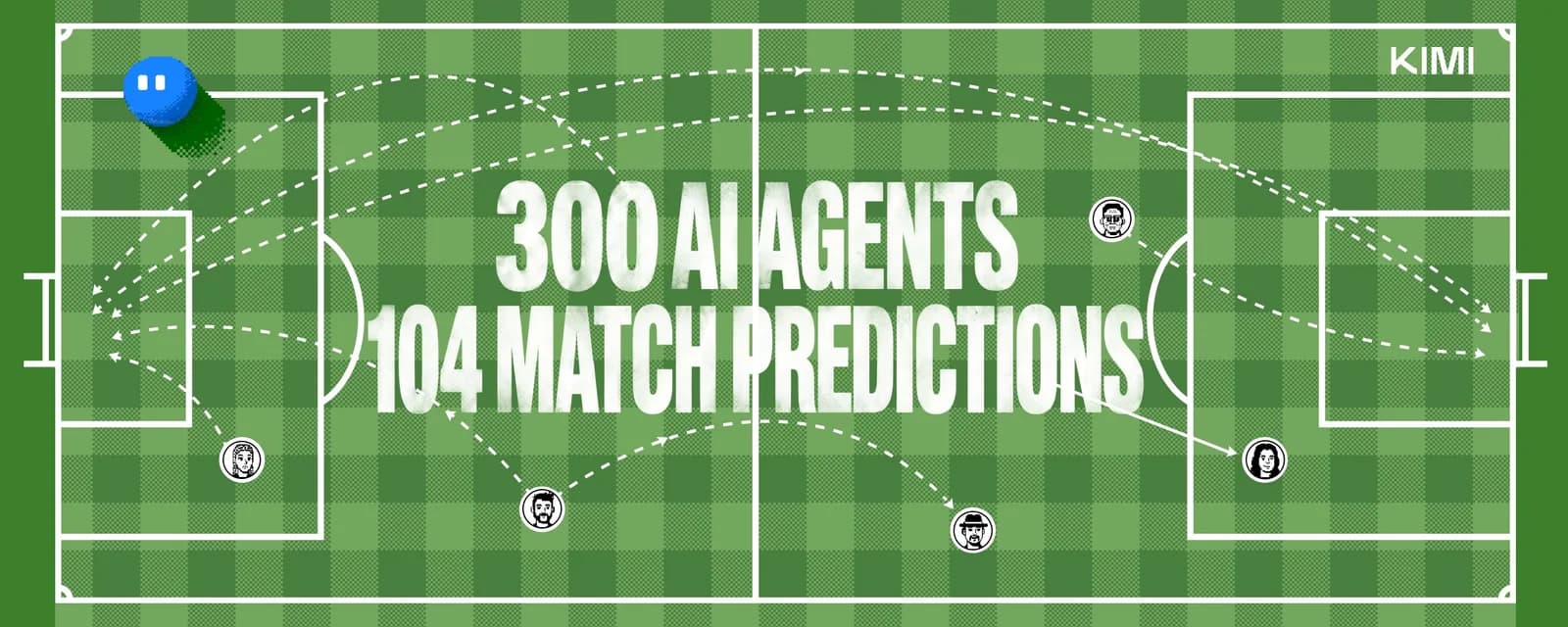
An AI just made a World Cup pick that football fans are going to argue about.
Its name is Kimi, and it is a Chinese AI built by a company called Moonshot AI.
It studied all 104 games of the 2026 World Cup and came back with a surprise.
It thinks one of the most famous teams in the sport is being badly underrated, and that team is Germany.
Kimi AI's World Cup prediction
Let's start with the safe part of Kimi's prediction.
At the very top, Kimi still likes the usual giants, with Spain and France as its 2 favorites to lift the trophy.
That is not the part that turns heads.
The eye-catching call is Germany, who Kimi says are being priced far too low.
Here are Kimi's numbers, and remember these are Kimi's figures, not ours.
Kimi's basic model gives Germany about an 11.0% chance to win the World Cup.
After Kimi double-checks and adjusts that number, it settles on about an 11.3% chance.
The betting market, meaning the odds the bookmakers set, prices Germany at only about a 7.4% chance.
That is a gap of around +3.6 points, which in plain English means Kimi rates Germany clearly higher than the market does.
A gap like that is exactly the kind of thing a curious fan loves to dig into.
Why does Kimi think Germany is underrated?
First, a quick warning so nobody gets the wrong idea.
Kimi did NOT say Germany will win the World Cup.
It flagged a probability that it thinks the market is underrating, which is a very different thing.
With that clear, here is the story Kimi is telling.
The big reason Germany look cheap is something called recency bias, which just means people give too much weight to what happened most recently.
Germany went out in the group stage at the last 2 World Cups, the first round where teams are split into small groups.
Those 2 early exits still drag down how people, and the betting market, see them today.
Kimi's point is simple: that is old news, and the team in front of us now is a much better one.
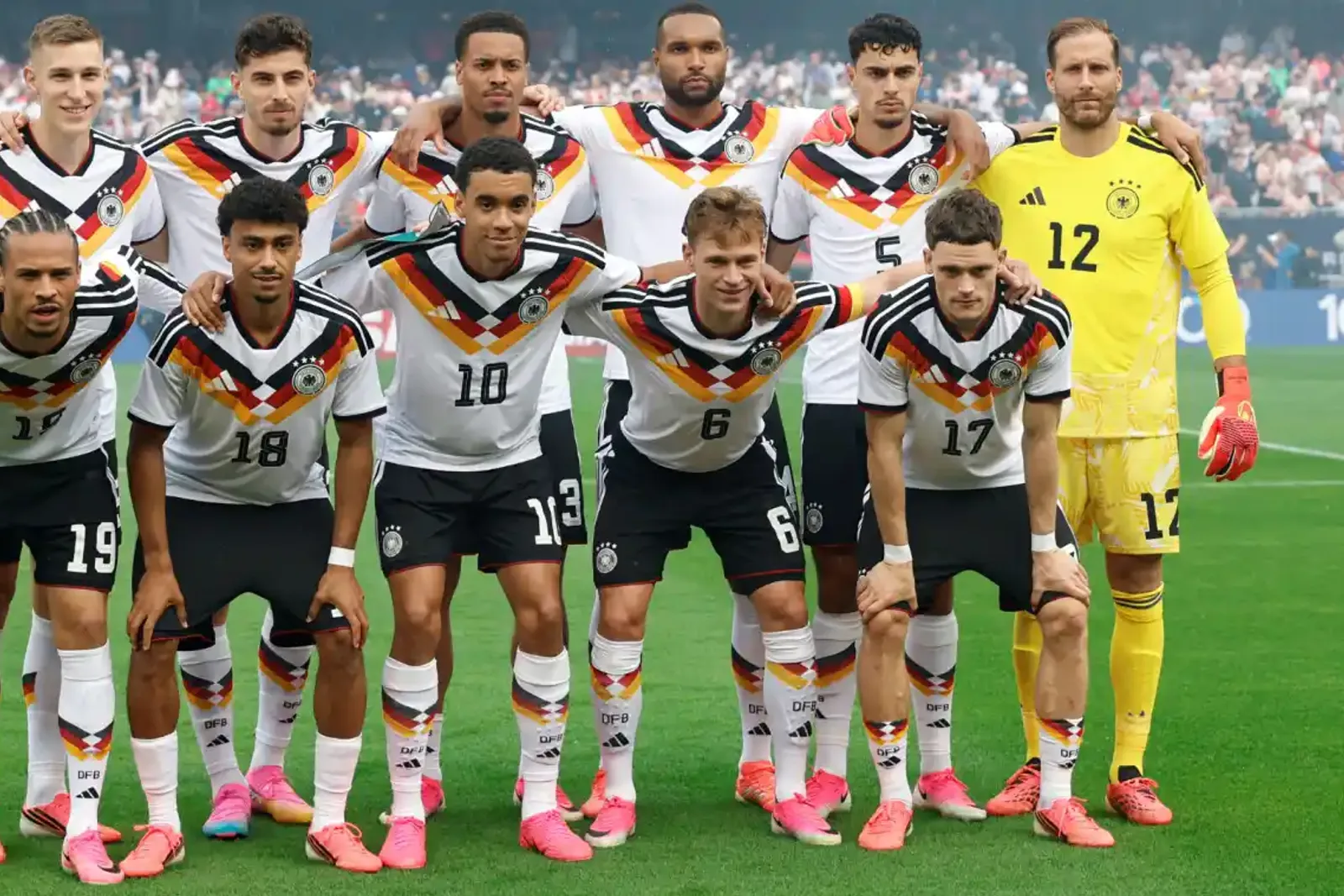
A big part of that is the coach, Julian Nagelsmann.
He is 38 years old, the youngest coach at the whole tournament, and he loves a fast, high-energy style where Germany press the other team hard and break forward quickly.
There is a fun human detail here too: Nagelsmann openly uses AI in his own training and planning, so an AI rating his team feels almost fitting.
Germany also seem to have fixed an old problem.
For years they struggled to break down teams that just sat back and defended in a deep, packed wall.
Now they have a new creative pair in Jamal Musiala and Florian Wirtz, two young attackers who can unlock a stubborn defense with one pass or one piece of magic.
On top of all that, Germany are still elite on the basics that win tournaments.
Their team is strong on Elo, which is a single number that rates how good a team is, and they have huge squad value and serious depth, meaning quality players right through the bench.
Kimi is honest about the risks too, which is the part we like.
A high-press style only works when the players are fully fit, because all that running is tiring.
Key injuries, or a well-organized and physical opponent, could shrink Germany's edge fast.
So this is not Kimi promising glory, it is Kimi saying Germany are worth a lot more than the market thinks.
How did Kimi reach this result?
This is the cool part, and it is simpler than it sounds.
Kimi used something called an agent swarm.
An agent swarm just means lots of small AI helpers working at the same time, instead of one big AI doing everything alone.
Kimi sent out about 300 of these little helpers, and each one had its own job.
One group rated pure team strength using Elo and the FIFA rankings (Elo is a strength rating, as we said above).
Another group judged how good each team is at attacking and defending using a stat called xG, which measures the quality of the chances a team creates, not just how many shots they take.
Other helpers looked at tactics, at travel and rest across a huge tournament spread over all 104 matches, at injuries, at betting-market signals, and even at random chaos like red cards and VAR calls (VAR is the video referee that reviews big decisions).
Here is the clever bit: each helper did not just give an answer.
Every helper handed back a conclusion, the evidence behind it, how confident it felt, and even a counter-argument against its own view.
Then Kimi combined all those answers, checked them against each other, and turned the result into probabilities rather than flat yes or no calls.
One nice example is that a specialist helper, acting as a market analyst, spotted a bias in the betting odds that a single AI working alone would probably have missed.
That little catch is a big part of why Germany jumped out as underrated.
Can you trust Kimi's World Cup prediction?
Let's be honest, an AI like Kimi is a sharp tool, but it is not a crystal ball, and it is definitely not a wise octopus.
The good sign is that Kimi is upfront about its own limits.
It says its high-confidence calls land about 85 to 90% of the time, its medium ones land about 55 to 65%, and its low-confidence calls are close to a coin flip.
It even expects around 5 to 7 surprise results in the opening round alone.
And honestly, that is the whole joy of football.
The game is wonderfully random, and the underdog stories are exactly why we love it.
So how do we read the Germany call?
We think it is genuinely interesting and well worth watching, but it is not a reason to bet your house on Germany.
The smart move is to stay curious and check the numbers for yourself.
You can see the live World Cup odds and line them up against Kimi's figures to spot where an AI and the market disagree.
It is also worth checking how the bookmakers rate each team, since that is the market Kimi says is underrating Germany.
And if you want to follow Germany's run from here, start with their next big test in this Germany match preview.
And if you would rather follow other people's calls than an AI's, see which Telegram betting tip channels are worth your time, and which to avoid.
An AI can hand you the odds, but the players still have to go out and write the story.
Common questions
Who does Kimi AI predict will win the 2026 World Cup?
Kimi still has Spain and France as its top 2 favorites for the trophy. But its most interesting call is that Germany are underrated, with a real chance the betting market is not giving them. So Kimi is not crowning Germany, it is saying do not write them off.
Why does Kimi think Germany is underrated?
Germany crashed out in the group stage at the last 2 World Cups, so people and the betting market still price them low. Kimi argues that is old news and points to their elite squad, their new high-energy style, and a fresh creative pair in Jamal Musiala and Florian Wirtz. In its math, Germany are worth about 11.3% to win, while the market says only about 7.4%.
How does Kimi AI predict football matches?
Kimi used an agent swarm, which just means lots of small AI helpers working at the same time, about 300 of them. Each one had its own job, like rating team strength, attack and defense quality, tactics, travel and rest, injuries, and betting-market signals. The results were then combined and shown as probabilities, not certainties.
Is Kimi saying Germany will definitely win the World Cup?
No, and this part matters. Kimi never said Germany will win, it flagged a gap between how it rates Germany and how the betting market prices them. That is a probability worth watching, not a guarantee.
Can you trust AI World Cup predictions?
Treat them as a smart tool, not a crystal ball. Kimi itself says its high-confidence calls land about 85 to 90% of the time, while low-confidence ones are basically a coin flip. Football is full of surprises, so the AI gives you the odds, not the result.
Where can I see the World Cup odds?
You can compare the live odds on our betting page and see how the bookmakers rate every team. Then you can line them up against Kimi's numbers for yourself. It is a fun way to spot where an AI and the market disagree.
Sources
- Kimi (Moonshot AI), 2026 World Cup prediction report
- Kimi (@Kimi_Moonshot) on X, World Cup prediction announcement
Sources checked 06/20/2026